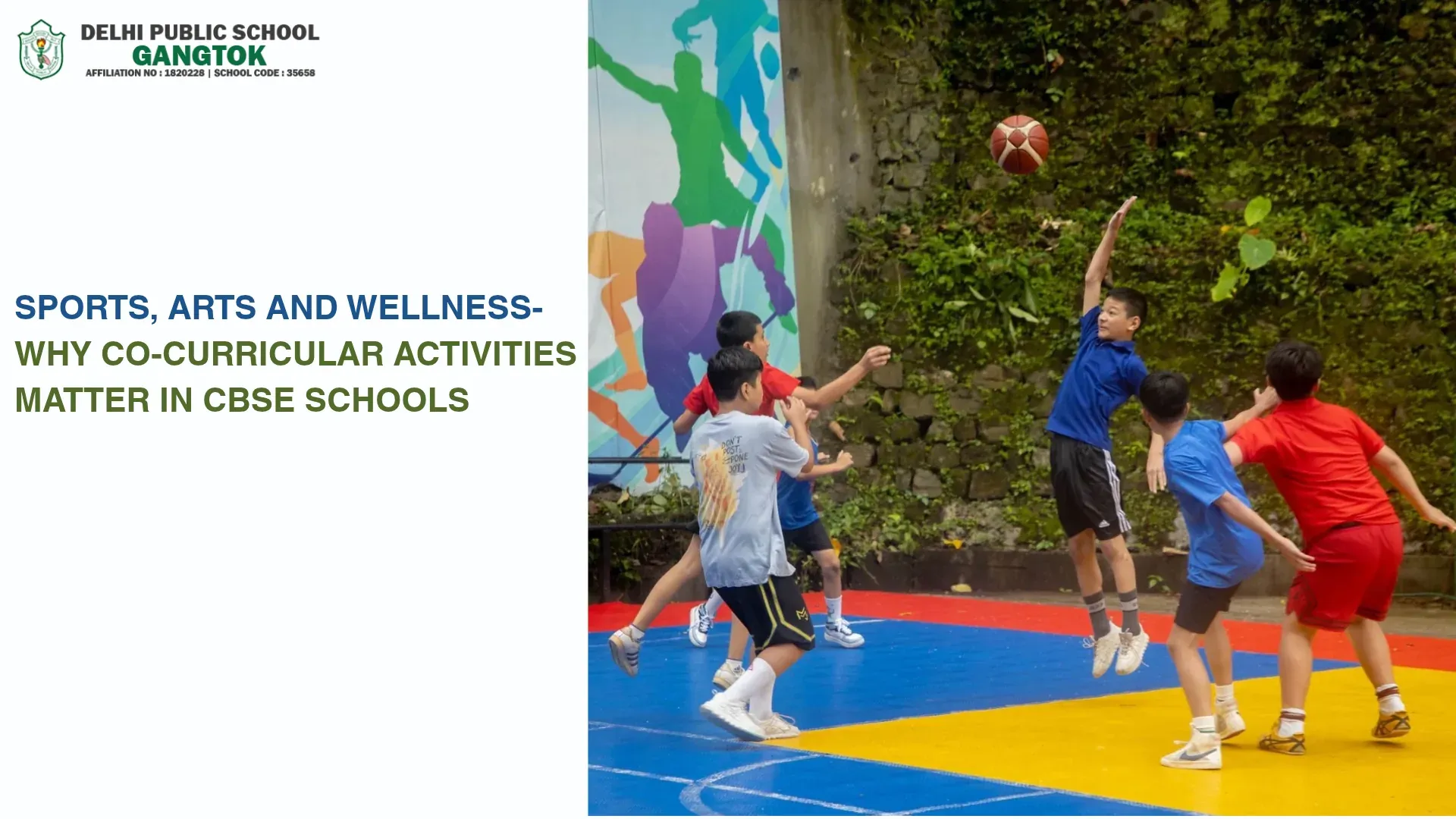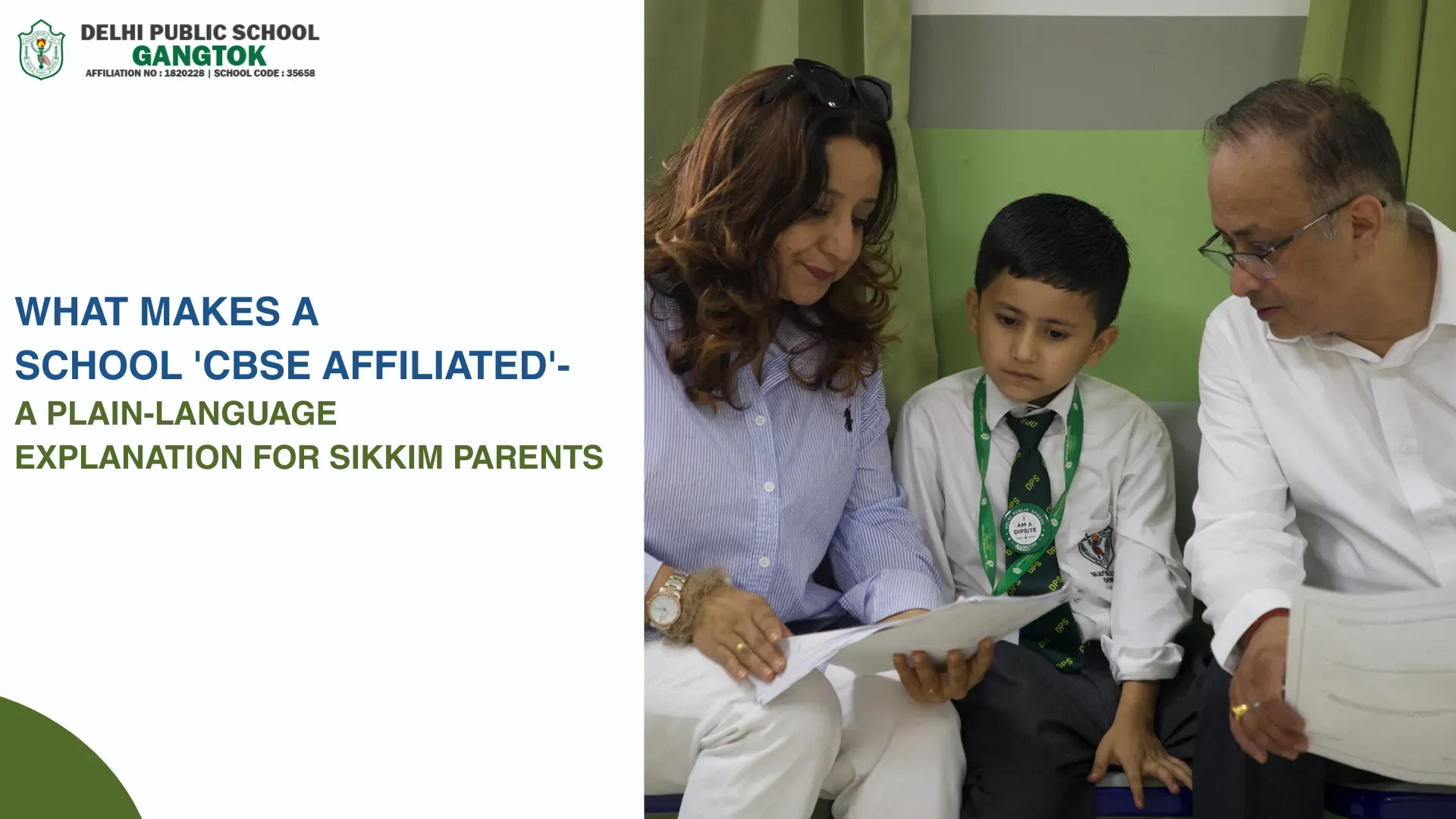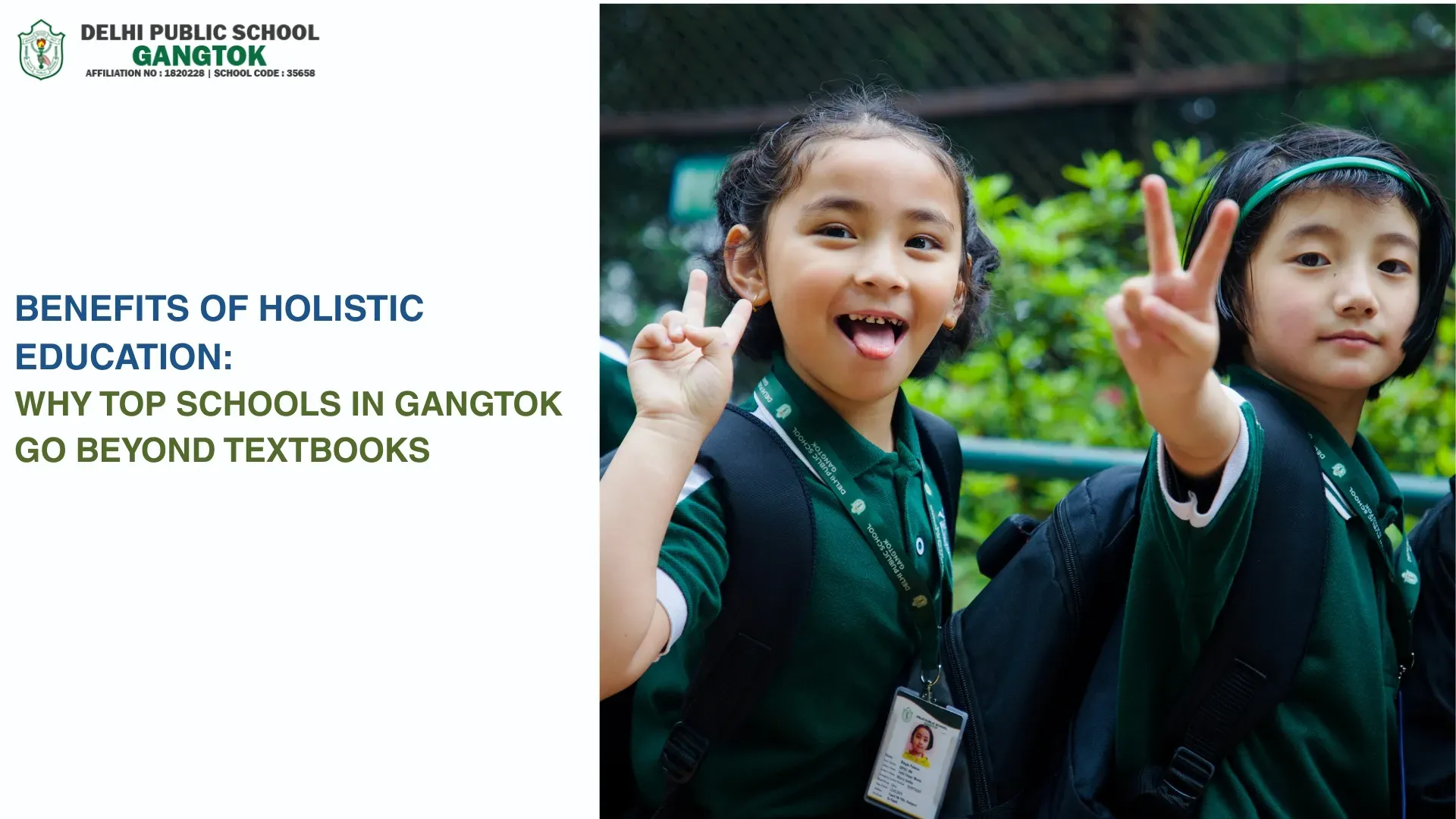
Top schools in Gangtok go beyond textbooks because the all round development of a child depends on many things other than textbooks. The social, emotional, psychological growth and development of a child is also known as holistic development. And Gangtok is a place which is blessed with the best gifts of nature like mountains, river, clean air. So top schools in Gangtok focus on holistic education and all development.
Yes, parents do want their child to get a rank in class and get all straight As but more than that parents want their child to be healthy and happy- mentally and physically fit and resilient. In today’s time it is more important than ever. So schools in Gangtok focus on education which lies beyond the pages of textbooks.
What Is Holistic Education?
Holistic education focuses on developing the child as a whole, rather than concentrating only on academic performance. It includes learning, emotional well-being, social skills, physical health, creativity and moral values.
For example, a classroom lesson can help children understand a subject, while a team activity can teach them cooperation and patience. Art, sports, group discussions and everyday interactions can also help children discover their strengths and learn how to work with others.
Learning does not always happen through textbooks. A conversation with a teacher, an activity in the playground or an opportunity to explore the natural surroundings can also teach a child something valuable.
The goal of holistic education is to help children become confident, curious and responsible individuals who can apply what they learn in everyday life.
Here is a simple comparison
| Textbook-Only Approach | Holistic Approach | |
| Focus | Marks and rote learning | Understanding and overall growth |
| Learning style | Listening and memorising | Projects, experiments, discussions |
| Co-curriculars | Treated as “extras” | Treated as core to learning |
| Student wellbeing | Rarely addressed | Counselling, mindfulness, mentoring |
| Outcome | Exam-ready students | Life-ready students |

Why Gangtok Is a Natural Home for Holistic Learning
Gangtok has some natural advantages. It helps in the propagation of holistic learning. It has the purest air, rich traditions and a friendly society. Nature, celebrations, and ecological farms are elements of everyday life in Gangtok. The best educational institutions of Sikkim appreciate these features in order to make the process of learning not only theoretical but also practical.
7 Benefits of Holistic Education
1. Stronger Academic Understanding
Children remember better when they engage in project-based learning. This includes conducting experiments, and relating learning to reality. For example, they understand better what ecosystems are if they go on a forest walk for the purpose of their lesson. A chapter from the social studies book becomes more meaningful for students after they have talked to local elders about the heritage of Sikkim.
Holistic schools promote such efforts as always inquiring “why” and “how”. This instills critical thinking, which, as a rule, results in better exam scores. This is specifically true of the CBSE schools in Sikkim which make use of the concept-centered curriculum.
2. Emotional Intelligence and Resilience
The child equipped to face challenges and recover from failures is better prepared for life than one who merely achieves academic success.
So focus on finding schools that provide:
- Counseling and mentoring programs
- Mindfulness and meditation activities
- Openness and group meetings
- Effective discipline measures
3. Better Physical Health
Sports, outdoor activities, yoga and trekking help to improve fitness, mood and concentration. They are also excellent ways to teach discipline and teamwork. The location of Gangtok enables easy integration of these activities into the school routine.
4. Creativity and Self-Expression
The use of music, dance, drama, visual arts, and crafts is extremely significant in terms of holistic education. They play an important role in the process of discovering children’s abilities, stimulating their divergent thinking, and letting them speak freely. From folk performances to paintings to debates, every single form of art helps build a more versatile personality.
5. Respect for Culture and Community
Lepcha, Bhutia, Nepali and several other communities call Gangtok their home. Schools emphasize holistic education by celebrating this diversity by conducting festivals, cultural and linguistic activities as well as community service. Children here learn to respect various traditions and develop a strong sense of belonging.
6. Environmental Awareness
Sikkim is reputed for its dedication to promoting sustainability and organic farming. Introduction to tree plantation activities, waste management schemes and eco clubs help kids learn that protecting the environment should be a part of their daily life, instead of being limited to books only.
7. Leadership and Life Skills
The student councils, group activities, public speeches and community programs help to develop the abilities that are impossible to find in any book.
- Communication and cooperation
- Solving problems and taking decisions
- Leading and being responsible
- Managing time and playing independently
These skills will be useful for students in their studies, work and personal life.

Is Holistic Education Good for Board Exams?
Yes, Holistic education supports academics. It does not replace it..
Children understand concepts, manage stress and stay active tend to learn better. Competitive exams such as JEE, NEET and CUET also reward conceptual clarity over memorisation. The honest takeaway is that the quality of teaching in the classroom matters more than the label on the brochure.
How to Tell If a School Is Truly Holistic
Many schools use words like “all-round development” in their brochures. Here is how to look beyond the words.
Step 1: Look at the daily timetable
Are sports, arts and life-skills sessions part of the regular schedule, or only squeezed in before annual day?
Step 2: Ask about student wellbeing
Is there a trained counsellor? How does the school handle stress, bullying and exam pressure?
Step 3: Observe the classrooms
Do you see group work, questions and discussions? Or only teachers talking and students copying?
Step 4: Check the co-curricular calendar
Look for clubs, competitions, field trips and community projects spread across the year.
Step 5: Talk to current parents and students
Happy, curious and confident children are the best proof of a school’s approach.
Red Flags Parents Should Watch For
| Red Flag | What It Looks Like | Why It Matters | |
| Only marks are celebrated | Toppers get all the attention, and other talents | are ignored | Children may feel pressure and lose confidence |
| Activities exist only on paper | A long list of clubs, but no photos, schedules | or teachers | The facilities may not be used in practice |
| No counselling support | “Our teachers handle everything” | Emotional needs may go unnoticed | |
| Heavy homework, no play | Children have little time for sports or rest | It signals a textbook-first mindset |
Questions to Ask During a School Visit
- How does the school balance academics with co-curricular activities?
- How many hours a week do students spend on sports, arts and outdoor learning?
- Is there a full-time counsellor or wellbeing programme?
- How do teachers encourage questions and inquiry in class?
- Which community, cultural and environmental projects do students take part in?
- How are parents involved in the child’s progress?
- What were the board results of the last three years?
- What is the student-teacher ratio per class?
Parent Checklist: Choosing a Holistic School
Holistic School Checklist
- Sports, arts and life skills appear in the regular timetable
- A counsellor or wellbeing programme is available
- Classrooms show projects, discussion and hands-on learning
- Cultural and community activities run through the year
- Outdoor and environmental learning is part of the programme
- Board results are strong and shared openly
- Teachers are qualified and the student-teacher ratio is reasonable
- I have seen the school in action, not just the brochure
FAQs
What is holistic education in simple words?
It is an approach that develops the whole child: mind, body, emotions, creativity and character. It goes beyond textbooks and exams.
Does holistic education lower academic performance?
No. When children understand concepts instead of memorising them, they usually perform as well or better. The aim is to build a stronger academic foundation, not to dilute it.
At what age should holistic learning begin?
From the very first years. Early classes are when children build curiosity, social skills and confidence, and these shape how they learn later.
Can a CBSE school offer holistic education?
Yes. The CBSE curriculum encourages concept-based learning and co-curricular participation. How well it is delivered depends on the school.
How do I find the best school in Sikkim for my child?
Start with the basics: verify the school’s affiliation and recognition. Then visit in person, observe the classrooms and ask the questions listed above. The best school is the one where your child will be happy, challenged and supported.
Is holistic education more expensive?
Not always. Fees vary from school to school. Ask for the complete fee structure in writing, including activity and other charges, so you can compare fairly.
Conclusion: Look Beyond the Textbook
The best schools in Gangtok understand that education is not about filling minds. It is about nurturing people. By going beyond textbooks, they help children become thoughtful learners, caring individuals and responsible citizens.
Look at the timetable, the classrooms and the children. These tell you more than any brochure can.
Are you ready to visit DPS Gangtok?
Book a campus visit to DPS Gangtok, download our parent checklist or contact our admissions team. We will be happy to help you!